Best Rajasthani Thali in Jaipur | Authentic Rajasthan Food
Best Rajasthani Thali JaipurRajasthani Food Jaipur15 June 2026
Best Rajasthani Thali in Jaipur – Complete Guide to Authentic Rajasthan Food
Looking for the best Rajasthani thali in Jaipur? Discover authentic Rajasthan cuisine, famous traditional dishes, vegetarian and Jain-friendly options, local food culture, and heritage dining experiences. This complete guide helps tourists, families, and food lovers understand what makes a traditional Rajasthani thali a memorable taste of Rajasthan.
Govindam Retreat Editorial TeamReviewed for Jaipur food lovers and tourists
Quick Answer
What Is the Best Rajasthani Thali in Jaipur?
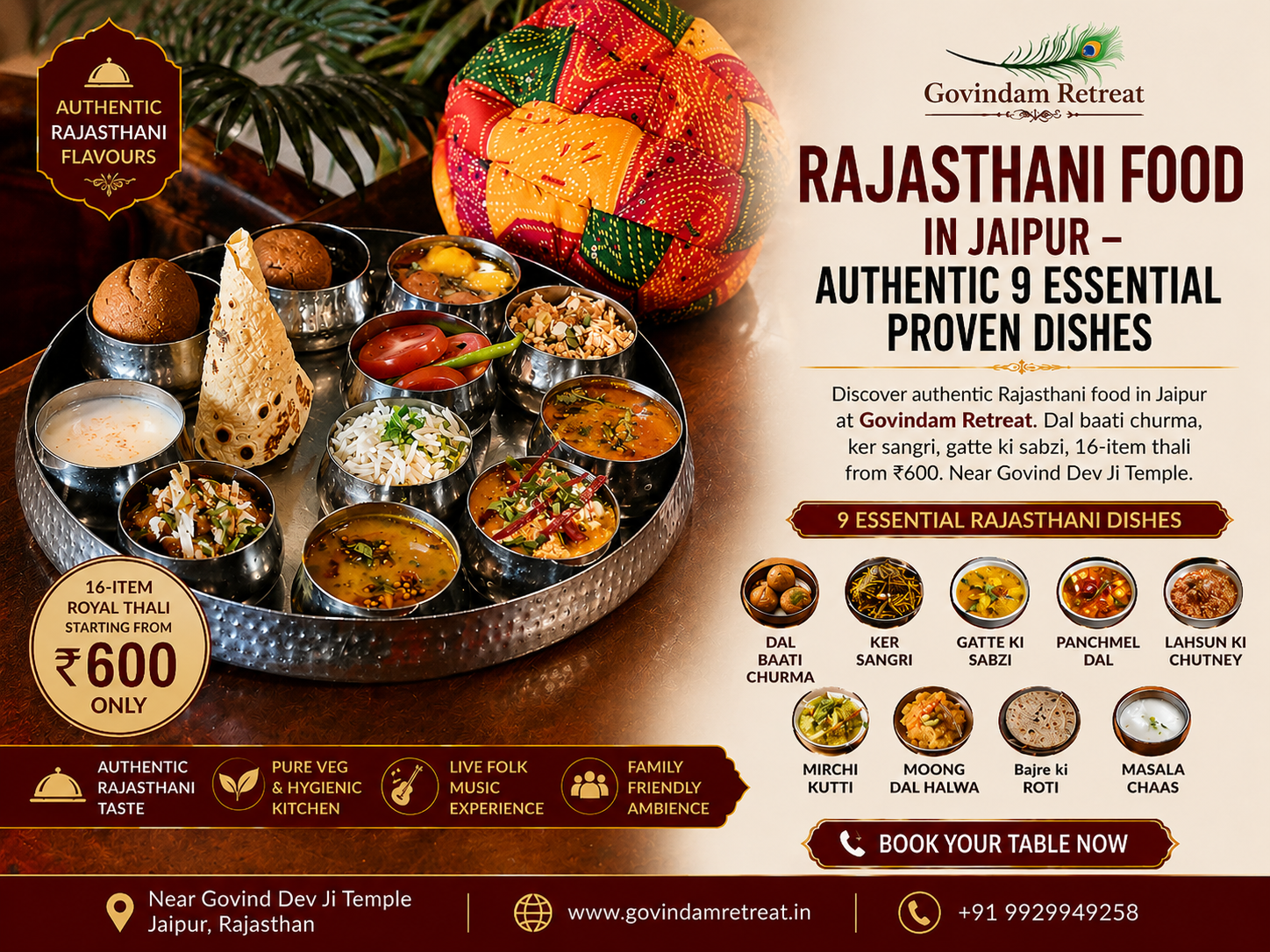
A traditional Rajasthani thali offers the most authentic way to experience Rajasthan cuisine. It combines famous regional dishes, traditional breads, local vegetables, sweets, and rich flavors in a single meal. For tourists, families, and vegetarian diners visiting Jaipur, a Rajasthani thali provides a complete introduction to Rajasthan's food heritage.
Taste multiple Rajasthan dishes in one meal
Experience authentic local food traditions
Enjoy vegetarian and Jain-friendly options
Discover Rajasthan's famous culinary heritage
Key Takeaways
What Makes a Rajasthani Thali Unique?
History of Rajasthan Cuisine
What Is Included in an Authentic Rajasthani Thali?
Most Famous Rajasthani Dishes Every Visitor Should Try
How to Identify an Authentic Rajasthani Thali
Vegetarian and Jain-Friendly Rajasthan Food Options
Best Time to Enjoy a Rajasthani Thali in Jaipur
Why Tourists Prefer Traditional Rajasthan Food
Experience Authentic Rajasthan Food at Govindam Retreat
Conclusion
Frequently Asked Questions
What Makes a Rajasthani Thali Unique?
A Rajasthani thali is not simply a large plate with many dishes. Its real value comes from how different parts of Rajasthan's food culture are brought together.
A good thali may move from a rich dal to a dry vegetable, then to a bread, tangy accompaniment, sweet churma, or traditional dessert. The tastes change as you eat, which makes the meal interesting from beginning to end.
It also helps first-time visitors. Instead of ordering five or six unfamiliar dishes separately, they can explore several regional flavors in one sitting.
A Meal Built Around Variety
A traditional thali can include different textures and tastes:
The exact combination can change by restaurant, season, and style of service. That variation is normal. Rajasthan itself has many local food traditions.
More Than a Restaurant Meal
Thali dining also reflects the idea of serving guests generously. Food, service, and hospitality work together.
This is why an authentic Rajasthan dining experience should not be judged only by how many bowls appear on the plate. Fresh preparation, traditional taste, thoughtful service, and the right combination of dishes matter more.
History of Rajasthan Cuisine
Rajasthan's cuisine developed in a region where people had to work with a dry climate, seasonal ingredients, local grains, dairy products, pulses, spices, and foods that could be stored well.
This shaped recipes that were practical but full of flavor.
At the same time, Rajasthan had royal courts, trading communities, temples, villages, and different local groups. Each added something to the state's food culture. The result is not one single style of cooking but a broad regional cuisine.
Why Rajasthan Developed Unique Food Traditions
In areas where fresh vegetables or water were not always easy to depend on, cooks learned to make excellent meals from ingredients that were easier to keep.
Gram flour, lentils, millet, wheat, yogurt, ghee, spices, dried ingredients, and desert produce became important.
This practical cooking created dishes that are now celebrated as Rajasthan specialties.
How Desert Climate Influenced Rajasthan Food
Ker Sangri is a good example. Its ingredients are strongly connected with the dry landscape of Rajasthan.
Millet also became important because crops such as bajra suit dry conditions better than many water-heavy crops.
Food traditions therefore grew around what the land could provide.
Royal and Everyday Food Traditions
Rajasthan cuisine also carries influences from royal kitchens and festive cooking. Rich sweets, dairy preparations, special occasion foods, and elaborate serving traditions sit alongside simple village recipes.
This contrast is one reason Rajasthan food feels so diverse. A single food journey can include rustic breads, gram-flour curries, desert vegetables, rich sweets, and celebratory dishes.
What Is Included in an Authentic Rajasthani Thali?
There is no rule saying every Rajasthani thali must contain exactly the same items.
Menus can change with the season, restaurant, region, and occasion. Still, several dishes are closely associated with a traditional Rajasthan meal.
Dal Baati Churma
Dal Baati Churma is one of the most recognized combinations in Rajasthan cuisine.
It brings together three different experiences:
Dal: a savory lentil preparation.
Baati: firm baked wheat rounds.
Churma: a sweet preparation made from crushed wheat with ghee and sweetening ingredients.
The contrast is the attraction. Dal brings warmth and spice. Baati adds body and texture. Churma introduces sweetness.
Together, they create one of Rajasthan's most recognizable food combinations.
Gatte Ki Sabzi
Gatte Ki Sabzi uses gram flour dumplings, commonly called gatte, in a spiced gravy that often uses yogurt.
The dish is important because it shows how Rajasthan cooks created satisfying vegetable-style dishes without depending only on fresh vegetables.
Its texture also adds something different to a thali. Gatte are firmer than ordinary vegetables and absorb the flavors of the gravy around them.
Ker Sangri
Ker Sangri is one of the dishes that makes a Rajasthan meal feel truly regional.
Ker and Sangri are ingredients associated with the desert landscape. They are traditionally prepared with spices to create a dish with earthy, tangy, and savory notes.
For tourists, Ker Sangri is worth trying because it is harder to understand Rajasthan's desert food culture without tasting ingredients that come from that environment.
Kadhi and Dal Preparations
Kadhi brings a tangy, comforting element to the meal. Dal adds depth and makes the thali more filling.
Different kitchens may prepare these dishes differently, so visitors should expect variation rather than one fixed recipe.
Traditional Breads
Bread is not simply an extra item in a Rajasthan meal. It changes how the curries and dry vegetables are experienced.
Common choices may include:
Bajra Roti
Missi Roti
Wheat Roti
Other regional breads
Bajra Roti has a deeper, earthier character than regular wheat roti. It works particularly well with strongly flavored regional preparations.
Accompaniments
A complete meal may also include small portions of:
Papad
Pickle
Chutney
Salad
Buttermilk or another traditional drink, depending on the menu
These items help change the taste between bites and add variety.
Traditional Desserts
Rajasthan has a strong sweet-making tradition.
Depending on the meal and season, visitors may come across:
Churma
Ghewar
Rabri
Mawa Kachori
Other seasonal sweets
Not every dessert belongs on every thali. Seasonal and festival menus can be different from everyday meals.
Most Famous Rajasthani Dishes Every Visitor Should Try
A visitor does not need to taste every Rajasthan recipe in one day. Starting with a few signature dishes makes the experience easier and more enjoyable.
Dal Baati Churma
For a first Rajasthan meal, Dal Baati Churma is difficult to ignore.
It offers savory, rich, and sweet tastes together and introduces a style of eating that feels different from a standard North Indian restaurant meal.
When eating it for the first time, try a little dal and baati before adding more ghee or accompaniments. This makes it easier to understand the basic flavors.
Ker Sangri
Ker Sangri deserves attention because it is closely connected with Rajasthan's landscape.
It is not simply another mixed vegetable. Its ingredients, preservation tradition, and flavor make it distinctly regional.
Gatte Ki Sabzi
Gatte Ki Sabzi is a useful dish for understanding Rajasthan's gram-flour cooking tradition.
It pairs naturally with roti and can also be enjoyed as part of a larger thali.
Mawa Kachori
Mawa Kachori offers a completely different side of Rajasthan cuisine.
Unlike savory kachori, this version has a sweet, rich filling. It is better treated as a dessert or special sweet rather than as part of the savory course.
Ghewar
Ghewar is closely linked with Rajasthan's sweet culture and becomes especially visible around festivals such as Teej and Raksha Bandhan.
Its porous, honeycomb-like structure makes it easy to recognize. Different versions may be topped or served with malai, rabri, or other rich additions.
Rabri
Rabri is made by slowly reducing milk to create a thick, rich dessert. It can be enjoyed on its own or paired with other sweets.
For visitors who enjoy dairy-based desserts, it is a useful addition to a Rajasthan food journey.
How to Identify an Authentic Rajasthani Thali
A long menu does not automatically mean an authentic thali.
Look instead at the recipes, ingredients, preparation, balance, and overall experience.
Look for Recognizable Regional Dishes
A Rajasthan-focused thali should contain meaningful regional dishes rather than simply filling the plate with generic curries.
Look for combinations involving dishes such as:
Dal Baati Churma
Gatte Ki Sabzi
Ker Sangri
Kadhi
Bajra Roti
Missi Roti
Not every one must appear, but the meal should have a clear Rajasthan identity.
Traditional Ingredients Matter
Regional ingredients help preserve the character of a dish.
Besan in Gatte Ki Sabzi, bajra in traditional bread, lentils in dal, desert ingredients in Ker Sangri, and ghee in appropriate recipes all contribute to authenticity.
Cooking Method Changes the Result
Two restaurants can use similar ingredients and still produce very different food.
Texture, cooking time, spice balance, freshness, and finishing all matter. Baati, for example, should not feel like an ordinary bread simply shaped into a ball.
Balance Matters More Than Excess
A good thali should allow you to taste different foods without every dish feeling equally heavy.
The best experience moves naturally between dal, vegetables, breads, accompaniments, and sweets.
Presentation Should Support the Food
Traditional-looking utensils can improve the visual experience, but decoration alone does not make a meal authentic.
Food quality and regional character should come first.
Vegetarian and Jain-Friendly Rajasthan Food Options
Rajasthan has a deep vegetarian food tradition, which makes Jaipur especially useful for travelers who prefer vegetarian meals.
Many famous dishes are naturally vegetarian. However, vegetarian and Jain food are not the same thing, so diners should communicate their requirements clearly.
Pure Vegetarian Meals
Vegetarian diners can explore dishes such as:
Dal Baati Churma
Gatte Ki Sabzi
Ker Sangri
Kadhi
Bajra Roti
Missi Roti
Traditional sweets
The exact preparation can vary, so anyone with strict dietary requirements should confirm ingredients before ordering.
Jain-Friendly Dishes
Jain food generally follows additional restrictions beyond vegetarian food.
A restaurant may be able to prepare certain dishes according to Jain requirements, but availability and preparation practices can differ.
It is better to ask clearly before ordering rather than assume that every vegetarian dish is automatically Jain-friendly.
No Onion No Garlic Food
Some diners prefer food without onion and garlic for religious or personal reasons.
When requesting such a meal, tell the restaurant before preparation if possible. This gives the kitchen a better chance to suggest suitable dishes.
Why Jaipur Works Well for Vegetarian Travelers
Jaipur's long vegetarian tradition gives visitors a broad choice of lentils, breads, grain-based foods, dairy preparations, regional vegetables, and sweets.
This means vegetarian travelers can experience Rajasthan cuisine without feeling limited to a small side menu.
Best Time to Enjoy a Rajasthani Thali in Jaipur
There is no single correct time to eat a Rajasthani thali. Lunch and dinner can both work well.
The better choice depends on your sightseeing plan, appetite, season, and preferred dining pace.
Lunch Experience
Lunch works well for travelers exploring the old city.
A typical day might include City Palace, Govind Dev Ji Temple, nearby markets, and a traditional meal in between.
A substantial thali at lunch can also be convenient because you have more time afterward to walk, shop, or continue sightseeing.
Dinner Experience
Dinner offers a slower experience.
After a full day of exploring Jaipur, families and tourists can sit down, share a meal, and enjoy Rajasthan cuisine without rushing toward the next attraction.
Restaurants with heritage-inspired surroundings can feel particularly inviting in the evening.
Festival Season Experience
Festivals can add another layer to Rajasthan dining.
Teej and Raksha Bandhan are strongly associated with Ghewar, while other celebrations bring their own sweets and seasonal foods.
Menus and availability can change during festival periods, so visitors interested in a specific dish should check before visiting.
Jaipur's Cooler Months
Many tourists visit Jaipur during the cooler part of the year because sightseeing is more comfortable.
A warm Rajasthan meal after exploring the city can be particularly enjoyable during this period, but authentic regional food can be enjoyed throughout the year.
Why Tourists Prefer Traditional Rajasthan Food
Tourists do not travel to Jaipur only to see monuments. Many want to understand what makes Rajasthan different.
Food provides that connection quickly.
Local Cultural Experience
Dal Baati Churma tells one story. Ker Sangri tells another. Bajra Roti connects the meal with local grains. Ghewar connects food with festivals.
When these dishes are experienced together, visitors begin to understand Rajasthan beyond photographs and monuments.
Traditional Hospitality
Hospitality is an important part of Rajasthan's cultural image.
A warm welcome, attentive service, and thoughtful explanation of unfamiliar dishes can make a meal far more useful to a first-time visitor.
Authentic Rajasthan Flavors
Travelers increasingly want local experiences rather than food they can order in any city.
Traditional Rajasthan cuisine provides:
Region-specific ingredients
Distinct cooking techniques
Local breads
Heritage recipes
Traditional sweets
That makes the meal part of the journey itself.
Easy Introduction Through a Thali
A thali removes much of the confusion for first-time diners.
Instead of trying to understand a long menu of unfamiliar names, visitors can taste several dishes and discover what they enjoy most.
Experience Authentic Rajasthan Food at Govindam Retreat
For visitors exploring the historic heart of Jaipur, Govindam Retreat offers a way to combine vegetarian dining with Rajasthan-inspired hospitality and a cultural setting.
Its location near Govind Dev Ji Temple also makes it relevant for travelers planning sightseeing around Jaipur's heritage area.
Location Advantage
Govindam Retreat is near Govind Dev Ji Temple and within Jaipur's historic sightseeing zone.
This can be useful for travelers combining food with visits around the old city and City Palace area.
Instead of treating lunch or dinner as a separate trip, visitors can include the meal naturally within their Jaipur itinerary.
Traditional Menu Experience
Guests interested in Rajasthan cuisine should look for regional dishes and thali-style experiences that allow them to taste several preparations together.
When choosing a meal, ask about the dishes included that day because menus, accompaniments, and seasonal items may change.
Tourist-Friendly Dining
A good tourist dining experience should make unfamiliar food easier to understand.
Visitors may want to ask:
Which dish should I taste first?
Is the meal spicy?
Which dishes are traditional to Rajasthan?
Are Jain-friendly options available?
Can a dish be prepared without onion and garlic?
Which dessert is seasonal today?
Simple answers to these questions can make the meal much more enjoyable.
Family Dining
Rajasthan food works particularly well for families because dishes can be explored together.
Some family members may enjoy Dal Baati Churma, while others may prefer Gatte Ki Sabzi, breads, Kadhi, or desserts.
Sharing the experience also gives children and first-time diners a chance to try small portions before choosing their favorites.
Make the Meal Part of Your Jaipur Experience
If you are visiting Govind Dev Ji Temple, City Palace, or nearby heritage areas, consider planning enough time for a relaxed meal rather than treating food as a quick stop.
Jaipur's cuisine deserves the same attention as its architecture and markets.
Book Table
Reserve Your Royal Vegetarian Dining Experience
Planning lunch, dinner, a family meal, tourist group visit, corporate lunch, or celebration near Govind Dev Ji Temple? Book your table at Govindam Retreat.
What is included in an authentic Rajasthani thali?
An authentic Rajasthani thali may include Dal Baati Churma, Gatte Ki Sabzi, Ker Sangri, Kadhi, traditional breads, dal, accompaniments, and regional sweets. The exact dishes can change by restaurant, season, and menu, so there is no single fixed combination for every traditional thali.
What is the most famous dish in a Rajasthani thali?
Dal Baati Churma is one of the most famous dishes associated with Rajasthan. It combines savory dal, baked wheat baati, and sweet churma. Together, the three parts provide different flavors and textures and make an excellent introduction to traditional Rajasthan cuisine.
Is a Rajasthani thali vegetarian?
Many traditional Rajasthani thalis are vegetarian and include lentils, gram-flour dishes, regional vegetables, breads, rice, accompaniments, and sweets. However, menus vary between restaurants. If you require a strictly vegetarian meal, confirm the restaurant's preparation practices before ordering.
Can I get Jain-friendly Rajasthani food in Jaipur?
Jain-friendly food is available at many vegetarian dining places in Jaipur, but preparation methods can differ. Tell the restaurant clearly that you need Jain food and ask about onion, garlic, root vegetables, and other ingredients you avoid before placing your order.
What should a tourist try first when eating Rajasthan food in Jaipur?
For a first experience, a traditional Rajasthani thali is a practical choice because it lets you sample several regional foods together. Start with Dal Baati Churma, then explore Gatte Ki Sabzi, Ker Sangri, traditional breads, Kadhi, and a local dessert such as Ghewar when available.
Where can tourists enjoy traditional Rajasthan food near Govind Dev Ji Temple?
Visitors exploring Govind Dev Ji Temple and the nearby heritage area can look for vegetarian restaurants serving regional Rajasthan dishes and thali-style meals. Govindam Retreat is located near Govind Dev Ji Temple, making it a convenient dining option to include in a heritage-area itinerary.
Subscribe
Get Jaipur food and dining guides
Receive updates on Rajasthani food, thali guides, festive dining, and Govindam Retreat experiences.